

Architecture is shaped not only by buildings, but by the ideas that make them possible. Before the constraints of capital, regulation, and procurement, there is a moment when architecture is allowed to think aloud. The first confrontation with this fertile moment usually takes place in academia, in the thesis. It is not merely a requirement for graduation, but a space of speculative freedom where architecture formulates hypotheses, builds arguments, and tests positions.
For many, it is also the first opportunity to think beyond the structure of academic programs — a first chance to explore something more personal, unresolved, or even unreasonable. While often seen as an endpoint, the thesis is better understood as a beginning: the first engagement with architecture as a form of reasoning, where the project is not yet a response, but a question.


To speak of the thesis is to touch a broader question: how architecture produces and organises thought. More than a pedagogical exercise, it exemplifies a condition in which the project becomes a vehicle for inquiry, where drawing, writing, and building operate as forms of reasoning. This mode of thinking does not belong exclusively to the academic realm. It can emerge in competitions, in design studios, in built work, or speculative research. What matters is not the format, but the attitude: the willingness to treat architecture as argument, to use the project as a way of framing ideas, positions, and hypotheses about the world.
Related Article
Towards an Architecture of Many Intelligences: How Collective Knowledge Shapes the Built EnvironmentThe Structure of Architectural Thought
To think architecturally is not simply to translate ideas into form, nor to solve spatial problems efficiently. It is, first and foremost, to construct relationships between objects and subjects, between matter and meaning, between constraints and possibilities. It is to operate within a system of interdependent decisions where drawing, writing, and building are inseparable from the way thought is structured. Unlike other forms of knowledge that proceed through abstraction and linear argument, architectural thought advances through configuration. It arranges rather than defines, composes rather than concludes. In that sense, architecture is not a language, but it thinks like one.
This way of thinking has been explored by several authors who have attempted to define what is distinct about architectural intelligence. Robin Evans, in The Projective Cast, writes that architecture is shaped less by what it represents than by how it projects — not only in the geometric sense, but as a mode of speculation. For Evans, drawing is not the passive act of reproducing ideas, but the very medium through which architecture invents its problems. He shows how projection, section, and plan are not neutral tools, but epistemological frames that shape what can be thought and built. To draw a section is not to describe a volume; it is to reveal structure, to imagine inhabitation.
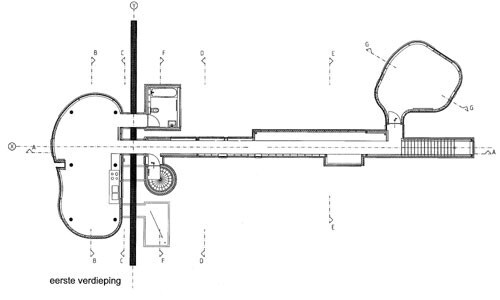
In Peter Zumthor's writings, particularly in Thinking Architecture, he frames design as a process of listening to place, to memory, to material. For Zumthor, architectural thought is not imposed upon a site, but excavated from it. The project emerges not as a concept applied from above, but as a form of care, of attunement. This mode of thinking is less about argument than atmosphere, less about logic than presence — yet it is no less structured. It reveals another dimension of architectural intelligence: the capacity to think sensuously, to reason through texture, rhythm, and weight.
But architectural thought is not only intuitive or atmospheric. It also involves strategy and tension. Rafael Moneo, in Theoretical Anxiety and Design Strategies, describes how architects oscillate between theory and pragmatism, between autonomy and service. For Moneo, this tension is not a flaw, but a productive space. It is what allows architecture to remain both rooted in reality and capable of abstraction. The architect, he argues, operates with an implicit theoretical consciousness, even when not explicitly formulated. Every project carries within it a latent argument about type, context, structure, form, and the task is to make that argument legible without reducing it.
This task, of articulating thought through form, is at the core of architectural practice. But it is often obscured by the demands of the profession: the need to deliver, to visualise, to resolve. Architecture becomes image, service, or product, and the logic of the project is hidden behind its surface. To think architecturally, then, is to resist that flattening. It is to recover the depth of the project as a site of speculation, where every line and choice carries intention.
Beatriz Colomina, in her work on architecture and media, reminds us that architecture does not only think through buildings. It also thinks through books, exhibitions, montages, and diagrams. Her analysis of how modern architecture was constructed through photography, in Privacy and Publicity, reveals that architectural thought often circulates outside of construction — it is mediated, framed, and performed. This expanded field of architectural production finds one of its most prolific articulators in Rem Koolhaas. His publications — most notably S,M,L,XL — are not just documentation of built work, but essays in architectural thinking. Structured as manifestos, atlases, and diaries, they communicate the complexities of the architectural project across multiple scales and media.
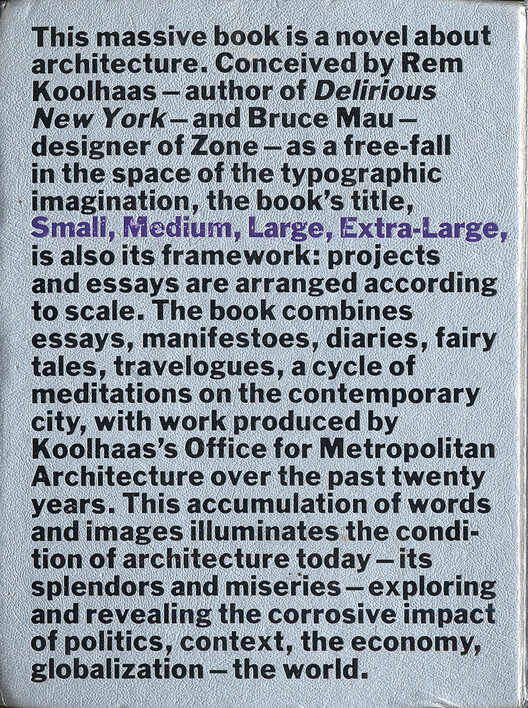
S,M,L,XL, in particular, is both an object of cult and a pedagogical tool, demystifying the practice of architecture while celebrating its contradictions. It constructs a form of intelligence that is critical and accessible, disciplinary and public. To think architecturally, in this light, is also to communicate — to make visible the arguments embedded in design and to open the project as a site of reflection.
The Thesis as a Space of Inquiry
The thesis occupies a peculiar place in architectural culture. Often treated as a final test of autonomy, it is, in fact, a threshold — a moment when architecture becomes accountable not only to form or function, but to thought. If architectural thought is projective and relational, the thesis is its most concentrated form. Detached from professional constraints, the thesis allows for architecture to unfold as epistemology — as a system for organizing and producing knowledge. It is here, in this deliberately framed space, that ideas can be tested not only for their formal clarity but for their conceptual consistency.
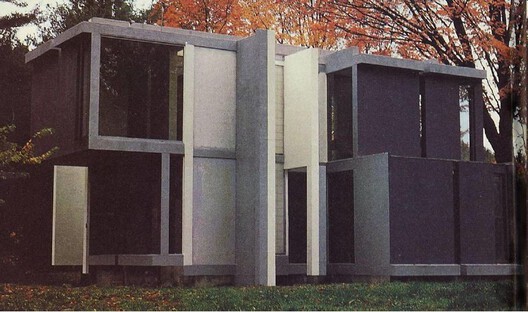
This has taken many forms. Peter Eisenman's early houses — House I through House X — were constructed as diagrams of thought. Developed not from the site or the client, but from formal operations derived from linguistic theory and structuralist models.
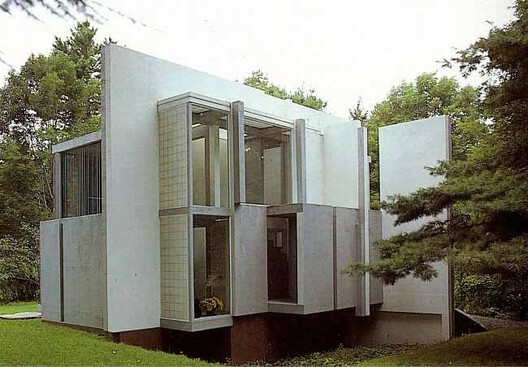
In House VI, perhaps the most emblematic, the internal logic of the design is independent from conventional use. Stairs do not lead anywhere, structural elements split rooms, and columns interrupt circulation. The house does not fail to function; it functions differently. It stages an architectural argument where syntax and structure override comfort or clarity. A thesis built as a contradiction.
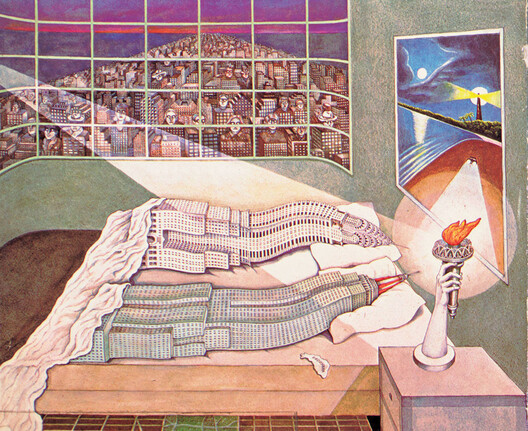
Rem Koolhaas took a different approach in Delirious New York. Often described as a "retroactive manifesto," Koolhaas reads Manhattan as a territory of unconscious architectural invention. Written before he had built anything of significance, the book is less a history than a speculative projection — a way of making sense of a city through the lens of form, fiction, and fantasy. The forms of the city are treated not as accidents but as evidence of hidden logics. It constructs an argument about modernity, congestion, and vertical living, not through technical analysis but through montage, satire, and myth. It is, itself, a mix of fiction, research, collage; a place where critique became a model for thinking architecture as a cultural project. The book itself is a project.
John Hejduk developed yet another variation. At Cooper Union, he encouraged students to develop "architectural poems" — deeply personal, often abstract, projects that explored space as narrative, symbol, and memory. The result was a kind of spatial literature, where architecture became a narrative structure.
His work, from the Wall Houses, dissolved the boundary between architecture and fiction. These projects were never intended to be built. They were devices to think with. In Hejduk's world, the thesis became a form of storytelling through architecture, a method of reimagining the discipline through allegory and spatial metaphor.
These three figures — Eisenman, Koolhaas, and Hejduk — offer distinct but complementary approaches to the thesis as epistemological space. Eisenman formalised logic, Koolhaas constructed narrative, and Hejduk composed fiction. What unites them is not style or ideology, but the belief that architecture can generate knowledge — and that the project is the medium through which this knowledge becomes legible. The project does not confirm what architecture is, but redefines what it could be. It is a space of permission — where abstraction is not escape, but method. Where the distance from reality allows architecture to speak more clearly about the world it seeks to shape.
Building as Thought
When grounded in architectural thought, buildings can become the most articulate form of argument — a way of structuring positions spatially, culturally, and politically. Some architectural practices embrace this challenge directly, treating each project not as an isolated solution but as a continuation of a conceptual inquiry. For these studios, to build is to think.
Dogma is perhaps the most explicit in this regard. Founded by Pier Vittorio Aureli and Martino Tattara, the office operates with a strict formal economy. Their drawings are rigorous and minimal: plans are often orthogonal, reduced to essential relations. But within their geometric restraint lies a radical proposition. Projects like Frame(s) or The Room of One's Own articulate an argument about the crisis of domestic space, the limits of individuality, and the political potential of repetition. These are not forms dictated by site or program, but spatial constructs designed to test ideas. The plan becomes a manifesto.
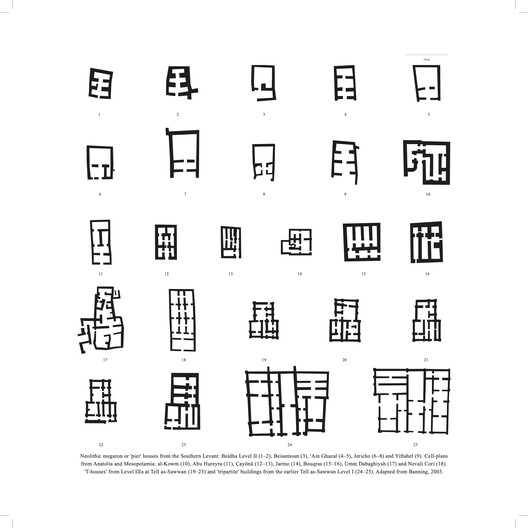
In A Simple Heart, a proposal for a secular monastery, the architecture enacts a form of collective withdrawal — a retreat not into isolation, but into structured life. The austerity of the form is not aesthetic, but ideological. The plan is both instrument and thesis — a site of refusal. But like these, each project in Dogma's portfolio reads as a fragment of a larger discourse that aims to reframe the very terms through which we define architecture.
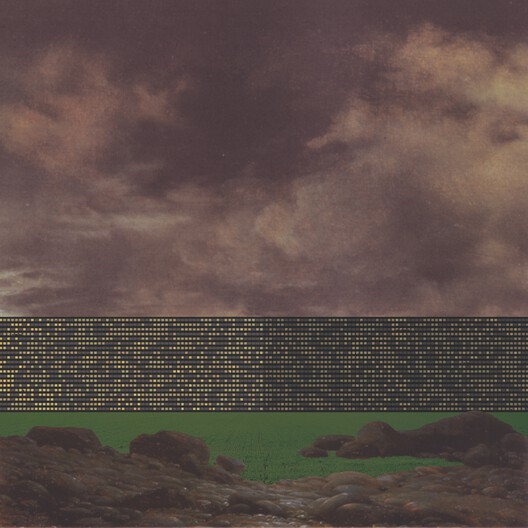
In a different register, the work of Baukuh operates through repetition, type, and anonymity. Their project House of Memory employs a classical language to produce a public building that is both familiar and abstract. But this formality is not stylistic. It reflects a thesis about collective identity, civic representation, and the endurance of typology. In their writings, Baukuh argues for architecture as a knowledge-based practice, where design emerges from shared history, not individual expression.
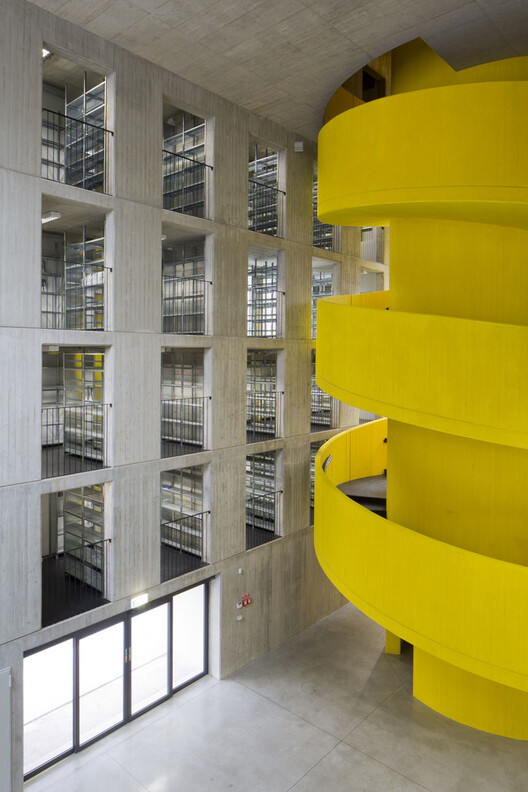
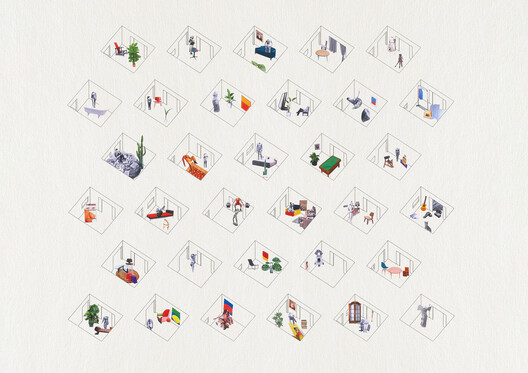
Other offices — MAIO, Assemble, Lacol — also operate through thesis-like frameworks, where each project is embedded in larger questions. MAIO, for example, explores systems of occupation, flexibility, and spatial negotiation. Their 110 Rooms project in Barcelona proposes a housing block composed entirely of rooms, equal in size, arranged in permutations, allowing for multiple ways of living. It is not only a response to changing demographics and economies, but a speculative proposition: what if domestic architecture were no longer defined by function, but by capacity? The building stages a scenario, not a solution.
In a context increasingly dominated by image and commercial logic, these practices insist on a different model: they refuse the dichotomy between thinking and doing. For them, the project is not the application of prior ideas, but the very place where those ideas are shaped.
Architecture as Argument
If the thesis marks the moment when architecture begins to think for itself, the challenge is to carry that intensity — that sense of speculation and coherence — into practice. The project, in its many forms, does not lose its capacity to argue once it enters the world. It gains weight. It becomes situated, contingent, exposed. But it also has consequences. The project becomes the place where thought is tested against matter, where ideas are materialised into form, regulation, and negotiation. To build does not mean to abandon argument; it means to refine it under pressure.
In that sense, thinking architecturally is not the privilege of academic contexts or the luxury of theoretical work. It is a condition of practice. Even within constrained commissions or public tenders, architects can articulate positions, however discreet, however embedded. The decision to preserve, to reduce, to frame, to repeat, to leave unfinished — all these are acts of reasoning, forms of resistance, or gestures of alignment. The intelligence of a project does not depend on its size, nor on the explicitness of its message. It depends on the clarity of its internal structure: how it holds together thought and form.
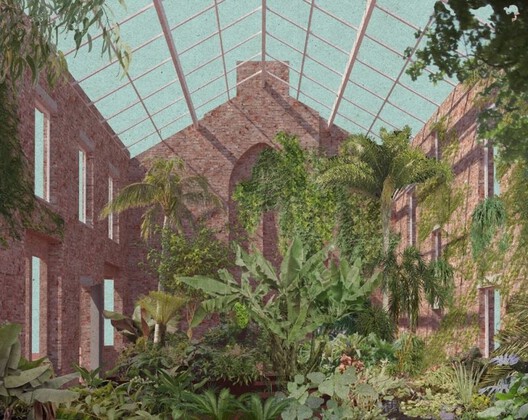
Some projects make this structure legible. In Granby Four Streets, Assemble helped residents reclaim abandoned homes in Liverpool through incremental renovation and participatory construction. The architectural outcome was modest, but the thesis behind it was powerful: that architecture is not limited to design, but includes process, dialogue, care, and maintenance. The project rejects the idea of architecture as a solution and embraces it as a negotiation. The result is not only spatial; it is political.
To reclaim the project as an argument is not to romanticize theory or slow down architecture's capacity to respond. It is to insist that design has stakes — epistemological, social, political — and that those stakes deserve to be thought through. A project that thinks does not need to speak loudly. But it must hold together. It must be intentional, legible, and situated. To design as a form of critical practice is not to abandon beauty or function. It is to recognize that both are always shaped by values, by history, and by choice.
In a profession increasingly dominated by speed, image, and compliance, reclaiming the project as a structure of thought is more than a disciplinary concern. It is a cultural and ethical one. The architect is not a neutral provider of solutions, nor simply an image-maker. The architect is a constructor of arguments: spatial, material, and civic. And the project is their form of writing.


